What Every Mahjong Tile Means
A standard mahjong set has 144 tiles across five groups. Here's what each one is called, what it looks like, and what it does in the game.
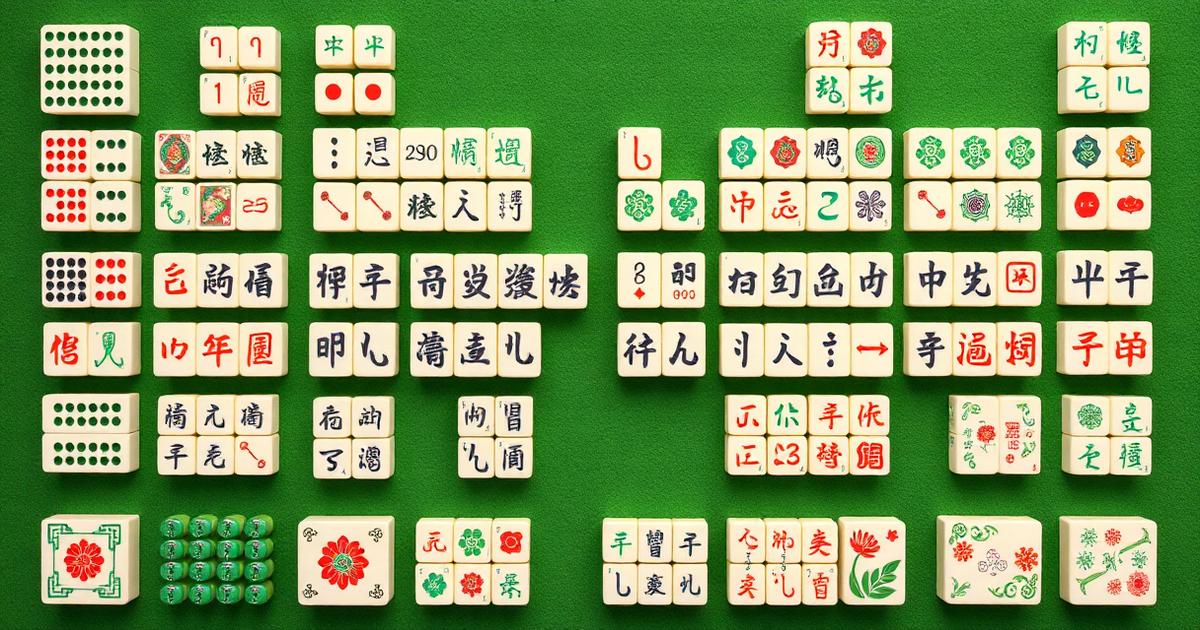
The three suits (108 tiles)
Every suit runs 1 through 9, with four copies of each number.
- Dots (筒子, tóng zi) — circles that historically represented coins.
- Bamboo (索子, suǒ zi) — sticks representing strings of 100 coins. The 1-bamboo is usually drawn as a bird.
- Characters (萬子, wàn zi) — the Chinese character 萬 (10,000) with a numeral above.
The four winds (16 tiles)
Four copies each of East (東), South (南), West (西), and North (北). Winds have double duty in scoring: your seat wind and the round's prevailing wind both give bonus points if you meld them.
The three dragons (12 tiles)
Four copies each of:
- Red Dragon (中, zhōng) — "middle".
- Green Dragon (發, fā) — "prosper".
- White Dragon (白板, bái bǎn) — a blank or framed white tile.
A pung or kong of any dragon almost always scores.
Bonus tiles: flowers and seasons (8 tiles)
Four flowers (plum, orchid, chrysanthemum, bamboo) and four seasons (spring, summer, autumn, winter). When you draw one you set it aside, take a replacement tile, and score a small bonus at the end of the hand. They aren't part of any meld.
Honors vs numbered tiles
Winds and dragons together are called honor tiles. Honors can form pungs and kongs but never chows (no sequences).
See them in play
Reading about tiles is the slow way to learn them. Open a game and the shapes stick after one hand. Every tile in Mahjong Pop is labeled on hover so you can build the vocabulary as you play.