Mahjong Solitaire vs Real Mahjong
Millions of people say they 'play mahjong' but have never played mahjong. They've played mahjong solitaire — a completely different game. Here's what separates them.
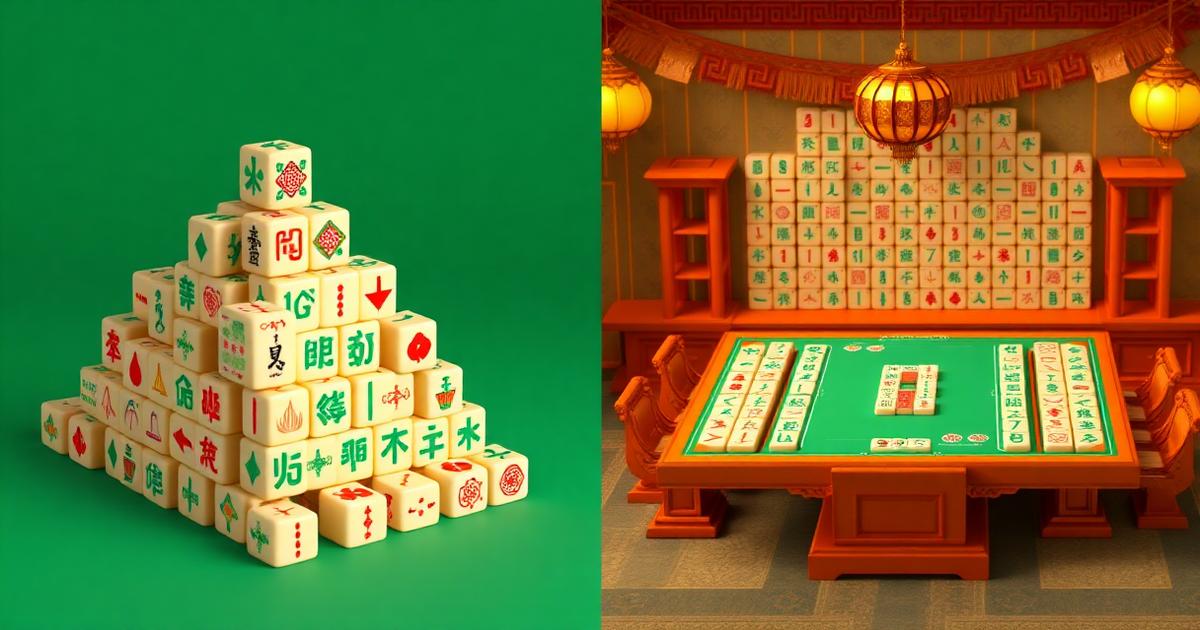
They share the tiles. Nothing else.
Mahjong solitaire — also called Shanghai, Mah-Jong Trails, or just "mahjong" on your phone — is a single-player tile-matching puzzle. Tiles are arranged in a stacked pyramid and you clear them by matching identical pairs.
Mahjong — the actual game — is a 4-player strategy game. You draw tiles from a wall, build a hand of four sets and a pair, and race three opponents to finish first.
Where solitaire came from
Mahjong solitaire was invented in 1981 by American programmer Brodie Lockard, who used real mahjong tile art for a puzzle game on the PLATO computer network. Microsoft included a version in Windows Entertainment Pack in 1990, and hundreds of millions of people learned the tiles through that puzzle — while never touching the real game.
Side by side
| Mahjong solitaire | Real mahjong | |
|---|---|---|
| Players | 1 | 4 |
| Goal | Clear the pyramid | Build a winning 14-tile hand |
| Skill | Pattern recognition, planning ahead | Strategy, memory, reading opponents |
| Session length | 5–15 minutes | 1–3 hours |
| Invented | 1981 (USA) | ~1850s (China) |
| Uses winds, dragons? | Cosmetic only | Yes — core to scoring |
Which should you play?
If you want a 10-minute relax-your-brain puzzle, mahjong solitaire is great. If you want the game people are actually gathering in cafes to play in 2026, you want real mahjong.
Mahjong Pop is real 4-player mahjong. Same tiles you know from solitaire, entirely different game underneath.